A tugboat is powerful because it pulls another vessel where it needs to go.
In an emergency, that is exactly what leadership may require. Step in. Take control. Move the team away from danger.
But if a leader spends every day acting like a tugboat, something is wrong. Every decision waits for a tow. Every obstacle requires rescue. The leader becomes exhausted, and the team never learns to navigate.
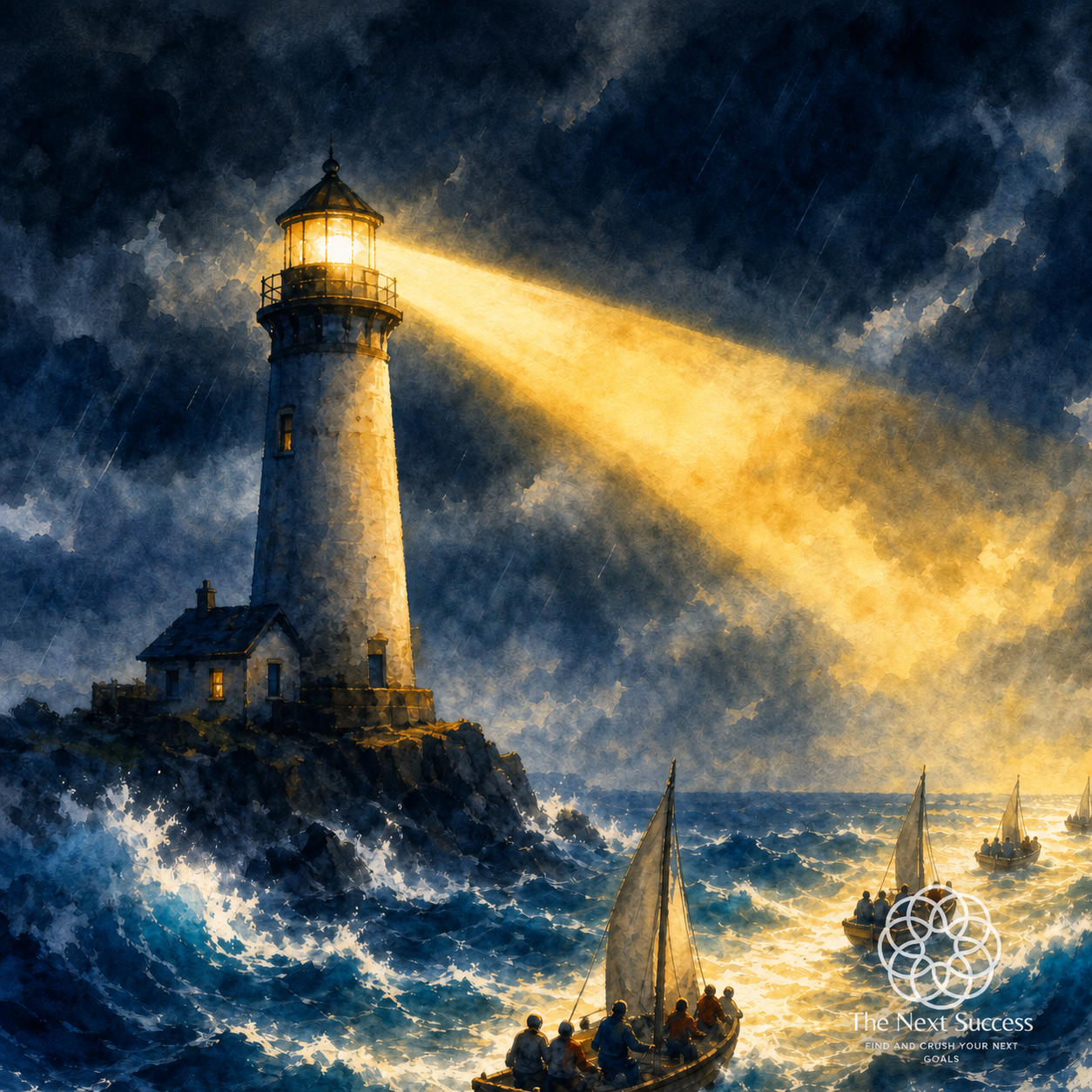
Most of the time, a leader should be a lighthouse.
Make direction visible
A lighthouse does not sail each ship. It provides a fixed point: here is the coastline, here is the danger, and here is the way through.
Teams need the same clarity. They should understand:
- What outcome matters most.
- Which principles guide tradeoffs.
- Where their authority begins and ends.
- When changing course requires a conversation.
If people repeatedly bring ordinary decisions to the leader, the problem may not be motivation. The boundaries may simply be invisible.
Consistency creates trust
A light that appears only in good weather is not useful. Neither is a leader whose priorities change with every meeting.
Consistency does not mean refusing to adapt. It means explaining what changed, why it changed, and what remains steady. People can navigate difficult conditions when the signals are dependable.
Repeat the mission more often than feels necessary. Connect new decisions to shared principles. Let the team see the same beam from different parts of the work.
Stop solving what others can learn to solve
When someone brings you a problem, resist the immediate urge to provide the route.
Ask:
- What do you see happening?
- What options have you considered?
- What principle should guide the decision?
- What support do you need from me?
This takes longer at first. Teaching navigation usually does. But the next decision becomes faster, and capability spreads beyond the leader.
Know when to leave the tower
The lighthouse metaphor has limits. Leadership is not distant observation. When the team faces immediate danger, lacks critical information, or is carrying an unfair burden, leaders must step in.
The goal is not to avoid responsibility. It is to use authority where it adds the most value—then return ownership to the people closest to the work.
The takeaway
You cannot tow everyone forever. You can create a direction strong enough for people to move without being pulled.
This week, notice one decision that always returns to you. Clarify the goal, name the guardrails, and let someone else steer.
Strong leaders do not make themselves the route. They make the route visible.